
Dental Bridges – San Juan Capistrano, CA
Get a Complete Smile Again
Losing even a single tooth can hurt your confidence and affect the way you speak and eat. The good news is that Dr. Omrani has multiple methods for helping patients regain complete smiles. Dental bridges in San Juan Capistrano can be used to replace one or multiple teeth in a row, and they can blend in so seamlessly that they can make it look like there were never any gaps in your grin to begin with. Give us a call today if you think you may be in need of a dental bridge.

Why Choose Platinum Dental Group of San Juan Capistrano for Dental Bridges?
- Natural-Looking, Durable Materials
- Dentist with Over Two Decades of Experience
- Comfortable and Welcoming Dental Office
What is a Dental Bridge?
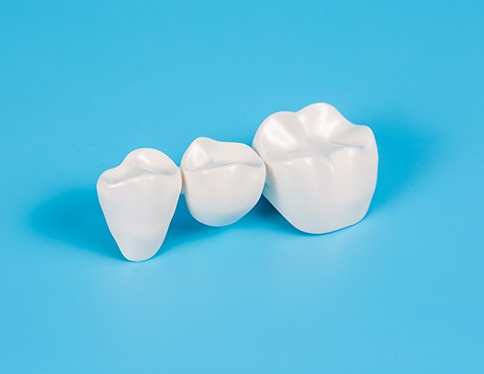
A dental bridge is made by combining two dental crowns with a number of artificial teeth, which are referred to as pontics. The crowns are what will allow your dentist to attach the prosthesis to the teeth that you still have. Meanwhile, the pontics between the crowns will act as your replacement teeth, completely filling in the empty space in your grin.
Dental bridges can be made out of materials that mimic the appearance of natural tooth enamel. As such, your new prosthesis can be personalized so that it blends right in with your remaining teeth.
Types of Dental Bridges
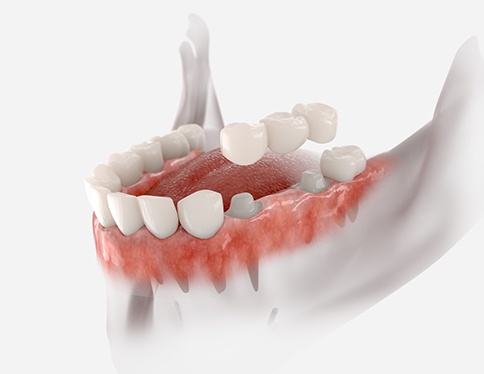
Before you can get a dental bridge, we’ll need to determine which kind is the best choice for your specific grin. Many patients can still benefit from a traditional dental bridge, but for others, an implant bridge might be a better option. Here are the basics of what you need to know about the two types of bridges.
Traditional Dental Bridge
A traditional dental bridge can be used to replace a single missing tooth or multiple consecutive missing teeth. The prosthesis will use two of your natural teeth for support; as such, we’ll need to confirm that the teeth in question are healthy and strong enough for the job.
Implant Bridge
If three or more teeth in a row have been lost, it may be possible to replace them with an implant bridge. This is a type of bridge that is supported by two dental implants instead of natural teeth. Dental implants can help prevent bone loss and provide your dental bridge with additional strength and stability. However, you can only have them placed if there’s enough bone present in your jaw.
The Benefits of Getting a Dental Bridge

Recompleting your smile with a dental bridge comes with the following advantages:
- The bridge will prevent your remaining teeth from drifting out of alignment.
- You will have a beautiful, natural-looking smile that can help you make a better first impression when it counts the most.
- It’s possible for a dental bridge to last for over 15 years if you take good care of it.
Dental Bridges FAQs
Are Dental Bridges Covered by Insurance?
Oftentimes, dental insurance providers cover a portion of the cost of dental bridges. With that said, coverage varies from patient to patient, and some plans include waiting periods and other restrictions. So, it’s important to read through the fine print on yours. Since we work with several popular providers, including Delta Dental, Aetna, and Cigna, we can help! Just provide us with your membership information when you call to schedule your appointment.
What Can You Not Eat with a Dental Bridge?
Since dental bridges in San Juan Capistrano are crafted from only the best dental materials, they are extremely durable. With that said, they can break with enough pressure. So, it’s best to avoid hard pretzels, peanut brittle, raw almonds, and other extremely crunchy foods. Since sticky sweets, like taffy, can tug on your restoration, it’s best to steer clear of those as well. Basically, you should fill your plate with softer, more nutrient-dense foods as often as you can, such as cooked carrots, cottage cheese, and oatmeal.
How Long Should a Dental Bridge Last?
Dental bridges typically last between 5 and 15 years. The wide range is due to several factors, including how well you care for your smile. The good news is that this tooth-replacement solution is relatively low maintenance. In addition to brushing, flossing, and rinsing with mouthwash consistently, wear a mouthguard during sports, eat mostly healthy, well-balanced meals, and schedule a checkup and cleaning twice a year.
How Many Teeth Can a Dental Bridge Replace?
In short, dental bridges can replace up to four missing teeth in a row. Any more than that, and the stability is compromised. Don’t worry, though – that doesn’t mean that you’ll be stuck with an incomplete smile and a compromised bite. Dr. Ben Omrani is proud to offer traditional dentures and state-of-the-art dental implants, too!
Can Dental Bridges Get Cavities?
No, dental bridges cannot develop cavities. However, that doesn’t mean that you don’t need to take care of your smile. After all, the underlying teeth can decay, your gums can develop an infection, and the appearance of your restoration will get noticeably worse if neglected. For all of those reasons, we recommend committing to a solid oral hygiene regimen at home as well as scheduling a dental checkup and cleaning every six months.
Can Dental Bridges Be Whitened?
While there are tiny pores in your enamel through which bleaching gels can enter and break apart stains, that’s not the case with restorations, like dental bridges. So, if yours start to develop a yellow hue, don’t waste your time or money on store-bought whitening kits. Instead, schedule an appointment with us so we can learn about your aesthetic concerns and goals.